
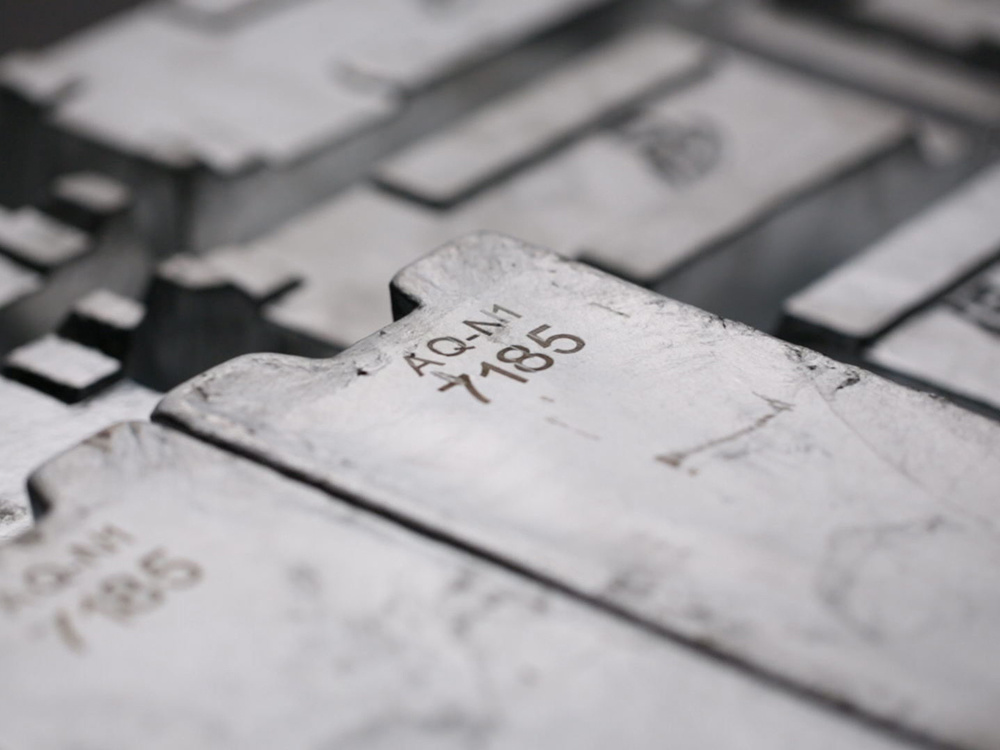
New Rare-Earth Series Hot-Dip Galvanized Alloy
Category:
Keywords:
Product Description
Hot-dip galvanized alloy rare earth alloy
Uses and Advantages
① Rare-earth alloy is a new hot-dip galvanizing alloy developed by our company in 2012, which can effectively enhance the galvanizing quality of active steel and Strenfors special steel.
② Small additions of alloy yield significant results.
③ The alloy has a broad addition range, making it suitable for various batch galvanizing processes, including high-temperature and low-temperature galvanizing, and for workpieces made of a wide variety of materials.
④ Enhanced fluidity of the zinc melt reduces burrs and flow marks, thereby improving surface quality.
⑤ The coating exhibits stronger adhesion to the steel substrate.
⑥ Reduce the zinc ash content.
How to Use
① When using the rare-earth-series hot-dip galvanizing alloy, galvanizing manufacturers generally do not need to modify their conventional hot-dip galvanizing equipment or processes. The zinc bath can be used in both high-temperature and low-temperature zones, and the addition rate may range from 0.5 kg to 1.2 kg of alloy per ton of iron workpiece. Manufacturers may add the alloy directly to the surface of the zinc bath based on the amount already added to the bath, while carefully controlling the content of alloying elements.
② When adding alloy, place the alloy in a lifting basket, then evenly move it to the upper layer of the molten zinc bath to ensure thorough mixing and complete dissolution of the alloy.
Precautions
① If the alloy is added unevenly, tiny particles may appear on the surface of the plated part. When this phenomenon is observed, stop adding the alloy and resume only after the small crystalline particles have completely dissolved.
② For workpieces that are prone to producing dull, lackluster coatings (such as 16Mn steel), a lower galvanizing temperature (<440°C) may be used, the time between galvanizing and water cooling should be minimized, and the alloying element content in the zinc bath may be appropriately increased.
③ The iron content in the fluxing agent should be carefully controlled to ensure coating quality and minimize zinc dross.
④ If special material treatment is suboptimal, please notify our company so that we can provide timely service.
Get a Quote
Please note: Kindly provide your mobile phone number and email address, and our dedicated staff will contact you as soon as possible!
Related Products
Baoding Aoqisheng New Metal Materials Manufacturing Co., Ltd.
Phone:0312-8063789
Fax: 0312-8063789-807
Contact: Manager Lu
Email:bdaqs0312@163.com
Website:www.bdaqs.com
Address: No. 1699, Central West Road, Qingyuan District, Baoding City, Hebei Province
Copyright © 2022 Baoding Aoqisheng New Metal Materials Manufacturing Co., Ltd.